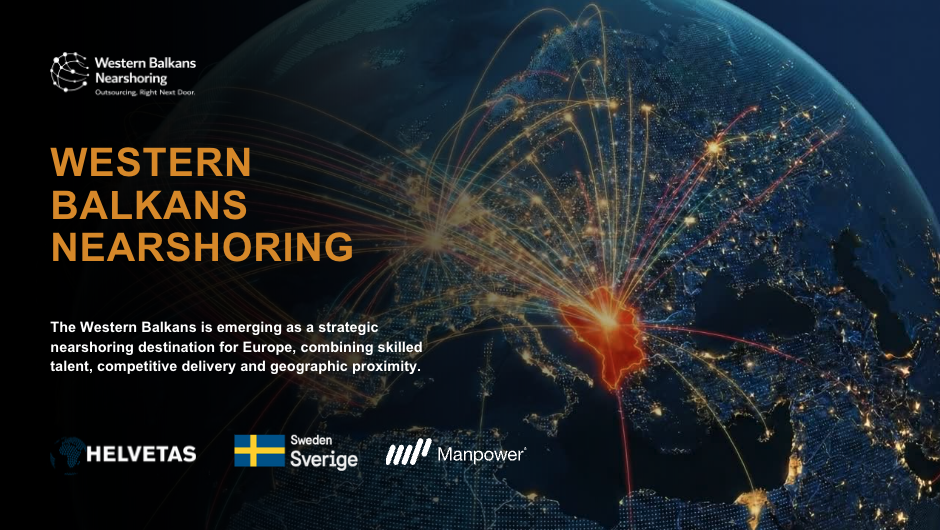
Closing the Perception Gap: The Western Balkans as a Technology Partner
For international companies evaluating where to build their next digital product, perceptions of a market can matter almost as much as its actual capabilities.
The Western Balkans is still often viewed primarily through the lens of lower operating costs and outsourced development. Yet the experience of technology companies working internationally suggests a more developed proposition: experienced product teams, close collaboration with European markets and the ability to contribute far beyond execution.
In this video, Rešad Začina, Co-Founder & Chief Growth Officer at Ministry of Programming, reflects on the company’s strong links with the Swedish startup ecosystem and what years of working with international clients reveal about the Western Balkans as a technology hub.
International partnerships are a test of capability
Working successfully with clients and startups in markets such as Sweden requires more than technical capacity. Technology teams need to understand the commercial objectives behind a product, communicate effectively with founders and internal teams, adapt quickly and take responsibility for decisions throughout the development process.
For companies considering the Western Balkans, this is an important distinction. The value of nearshoring is significantly greater when an external team can become part of the product-building process rather than simply receive and execute predefined tasks. Close links between the Nordic and Western Balkan technology ecosystems demonstrate that this type of collaboration is already taking place.
The reality often exceeds the perception
One of the most important signals for a potential investor or client is what existing international partners discover once collaboration actually begins. The region’s technology sector has developed through years of exposure to international projects, startups and demanding global markets. As a result, the gap between how Western Balkan teams are sometimes perceived from the outside and how they operate in practice can be significant. For European businesses, that makes direct market evaluation particularly important.
Talent quality, communication, product understanding and the ability to integrate with existing teams cannot be assessed through labour-cost comparisons alone. They become visible when companies engage with the people and organisations already operating in the ecosystem.
A broader technology investment proposition
For a CEO in Northern or Western Europe, the business case for the Western Balkans should therefore not begin and end with lower development costs.
Competitive operating conditions remain an advantage, but they sit alongside geographic proximity, experienced technical talent, international delivery experience and increasingly mature technology companies. Together, these factors create opportunities ranging from extending an existing development team to building new digital products and establishing longer-term technology partnerships in the region. The more relevant question is no longer simply whether work can be outsourced to the Western Balkans. It is what additional capability a company can build by working with the region.
For European businesses facing pressure to innovate faster, access specialised talent and manage development costs without sacrificing collaboration, that is a proposition worth examining directly.
Watch the video to hear Rešad Začina’s perspective on working between the Western Balkans and international technology markets.
Discover further insights and download the full Western Balkans Nearshoring Report at westernbalkansreport.manpower.ba.