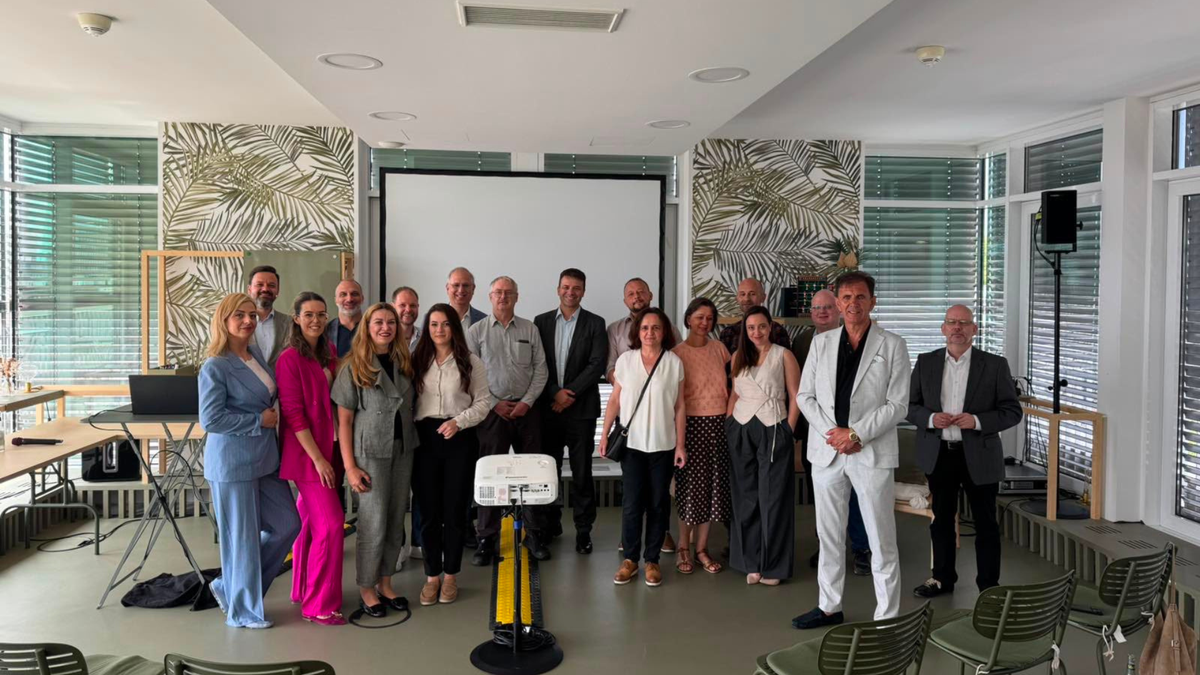
German investors see BiH and the region as a new GBS destination
Frankfurt hosted a business event where the Western Balkans was presented to German companies as one of the most promising European destinations for investments in the Global Business Services (GBS) sector, outsourcing and nearshoring.
The event brought together representatives of German companies interested in expanding their business in Europe, who were presented with the key competitive advantages of Bosnia and Herzegovina and the rest of the Western Balkans – a qualified workforce, competitive operating costs, geographical proximity, a common time zone and an increasingly developed business ecosystem.
A special focus was placed on Bosnia and Herzegovina, which is increasingly positioning itself as an attractive destination for companies wishing to establish or expand their development centers, shared service centers, customer support operations and other business functions intended for the European market.
In his opening remarks, the Executive Director of the Foreign Investors Council of Bosnia and Herzegovina (FIC), Nedim Makarević, presented the business environment and key advantages that BiH offers to international investors today.
Speaking about the country's potential, Makarević emphasized that BiH has an educated and competitive workforce, good knowledge of foreign languages, a favorable tax environment, and a growing number of successful international investments, which confirm that the country can be a reliable partner for the development of the Global Business Services industry.
The centerpiece of the event was the presentation of the first comprehensive regional study on the potential of the Western Balkans for nearshoring and outsourcing. The study was presented by Haris Kadenić, Marketing Director of Manpower South East Europe, which, in partnership with Helvetas through the RECONOMY program, funded by the Government of Sweden, conducted research in Albania, BiH, Kosovo, Montenegro, North Macedonia, and Serbia.
The report, for the first time, provides a unified view of the market size, talent availability, salary levels, tax systems, infrastructure, and investment conditions in all six countries, providing international companies with a unique overview of the region as a connected business destination.
Data shows that the Western Balkans today represent a market with more than 16 million inhabitants, more than 7.5 million active working population, more than 100,000 experts in the ICT and Business Process Outsourcing sector, more than 1,000 ICT companies and an ICT industry worth more than 5.5 billion euros, which places the region among the most interesting European locations for future investments in service industries.
A special value was given to the event by a panel discussion with Nadina Gradaščević, CEO of ABSL Western Balkans, a regional association that brings together leading companies in the Global Business Services industry.
Speaking about the experiences of companies already operating in the region, Gradaščević emphasized that investors are increasingly recognizing the Western Balkans not only as a price-competitive location, but also as a region that offers quality experts, high flexibility, excellent cultural compatibility with the European market and the possibility of long-term business development.
The event ended with an open discussion with representatives of German companies, during which great interest was expressed in specific investment opportunities, the availability of professional staff, the regulatory framework and the potential for establishing business centers in Bosnia and Herzegovina and the rest of the region.
The organizers emphasize that it is precisely the level of interest and the quality of questions that followed the presentations that are the best confirmation that the German market is increasingly seriously considering the Western Balkans as a new European destination for the development of Global Business Services and nearshoring operations.
The full report "Western Balkans Nearshoring: Outsourcing Right Next Door" is available under westernbalkansreport.manpower.ba
RECONOMY is an inclusive and green economic development program of the Swedish International Development Cooperation Agency (Sida), implemented by HELVETAS Swiss Intercooperation in the Eastern Partnership and the Western Balkan countries. The Report is done in cooperation with Manpower offices in South East Europe who provided market research and analytics.